TOOLKIT: Protect Abortion Access
We believe everybody is entitled to reproductive freedom. Explore our toolkit for more 🙏
This FEMINIST toolkit is organized into FIVE different categories: CONTEXT, ACCESS, ACTION, CARE, and CONVERSATION. The dropdown menu describes each section. If you are looking to take action to protect the human right to abortion, visit the ACTION section.
→ Share this toolkit on twitter HERE
-
To learn more about the context of abortion rights in the United States and World, check out the CONTEXT category.
-
To see a map detailing abortion access currently in the United States and World, check out the ACCESS category.
-
Learn more about the politics impacting abortion access in the US
-
To take action for abortion rights through advocacy, check out the ACTION category.
-
To find ways to get an abortion or tools for self-care and mental health help, check out the CARE category.
-
To catch up on the latest conversations from FEMINIST on abortion rights, reference the CONVERSATION category.
At a glance:
1️⃣ You can still access legal abortion care in the US—safe at home abortions are available visit “CARE” below for more information.
2️⃣ Your vote matters— you have the power to vote for bold, unapologetic champions for abortion rights in elections. Access the Pro-choice voter guide.
3️⃣ You have the power to protest and contact your local lawmakers. You can continue to advocate and protect abortion in your local community.
4️⃣ Organizations will continue to fight back.
👥 Join us in fighting back to protect abortion access all across the country. 🛠 This is your toolkit to take action and share with your friends & family.
CONTEXT
📣 STATE OF ABORTION IN THE UNITED STATES AND WORLD
UNITED STATES: Post-Roe
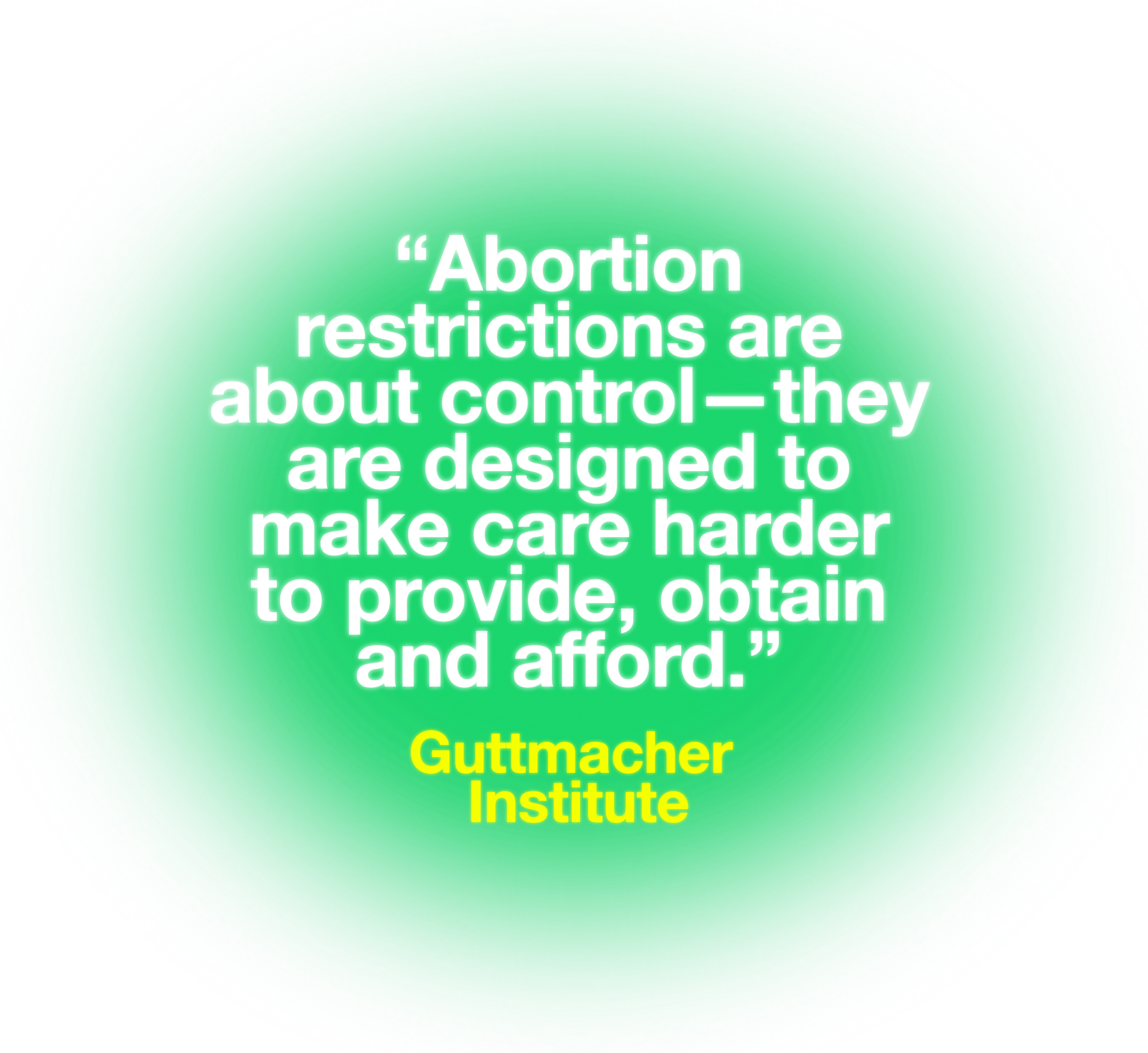
On June 24, 2022, the United States Supreme Court overturned Roe v. Wade, crucial legislation that made abortion access a protected federal right in the United States. This devastating decision reversed 50 years of legal protection and allowed the decision to guarantee abortion rights to go to individual states. According to the Guttmacher Institute, 41 U.S. states have abortion bans with only limited exceptions.
After Roe fell, a federal judge in Texas’ made an unprecedented decision to attempt to revoke the FDA approval of mifepristone in Alliance for Hippocratic Medicine v. FDA. On April 21, the U.S. Supreme Court issued a stay in the case, temporarily preserving access to medication abortion using mifepristone. As of June 2024, the U.S. Supreme Court rules upheld access to mifepristone — for now — determining that the plaintiffs lacked standing.
In 2025, Republicans have intensified their efforts to restrict abortion access across the country and a national abortion ban remains a top priority. GOP-led states continue introducing bills to criminalize those who help pregnant people obtain abortions, restrict out-of-state travel for the procedure, and expand funding for deceptive "crisis pregnancy centers." Meanwhile, Planned Parenthood faces renewed attacks, with leaders in Texas and Tennessee pushing to strip the organization of Medicaid funding.
These escalating restrictions have created a complex legal landscape where pregnant people's medical decisions are increasingly constrained by state law. The intersection of these policies with emergency medical situations has led to particularly troubling cases. This month, one such case emerged in Georgia: Adriana Smith, a 31-year-old mother and nurse, was declared brain-dead while nine weeks pregnant and kept on life support until doctors deemed the fetus viable—highlighting the stark reality of how abortion restrictions can have devastating impacts on birthing people and their families.
THE WORLD
The right to safe and legal abortion is a fundamental human right protected under numerous international and regional human rights treaties and national-level constitutions around the world.
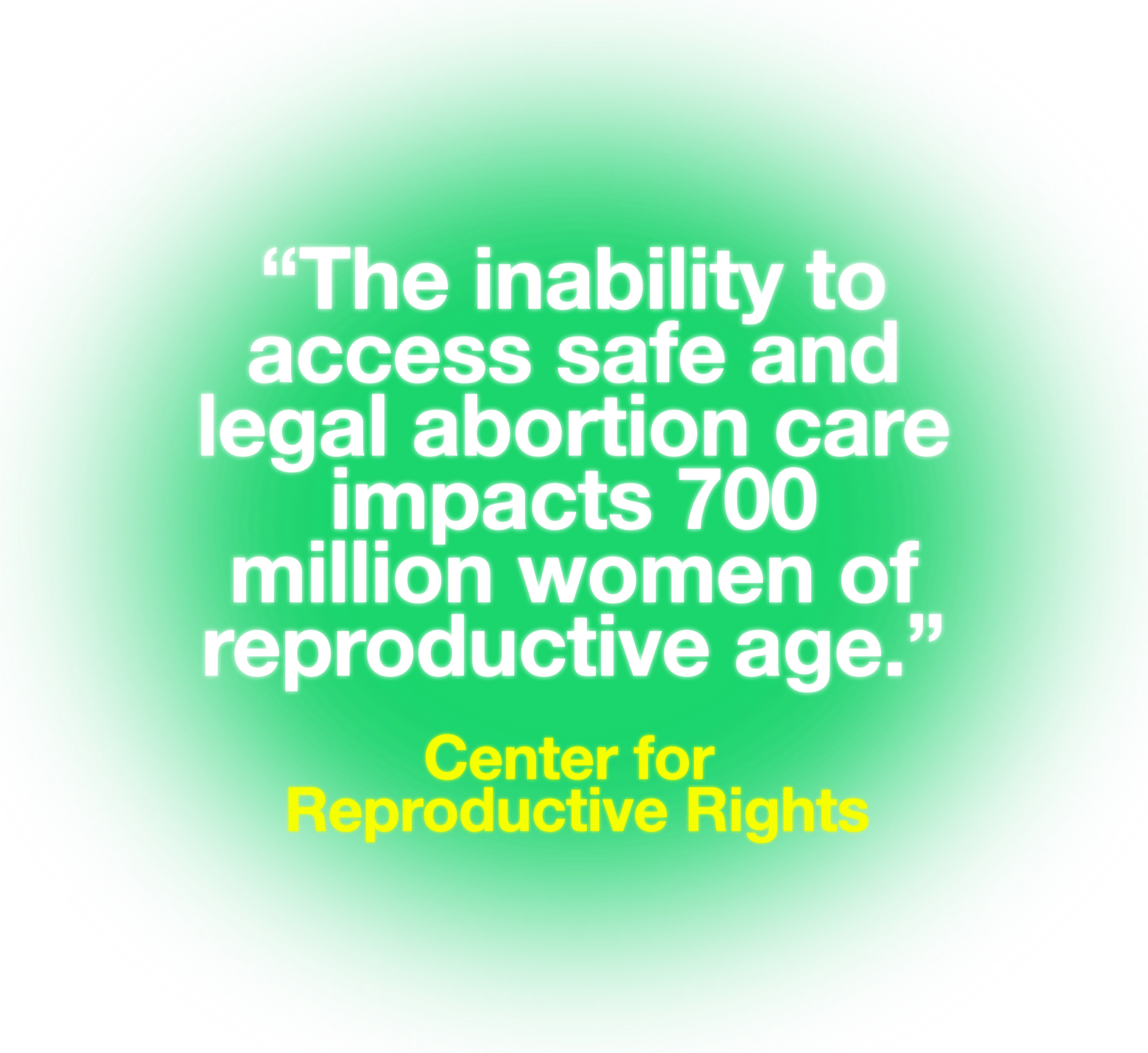
According to the Center for Reproductive Rights, 40 percent of women live in countries with restrictive laws. The inability to access safe and legal abortion care impacts 753 million women of reproductive age.
The Center for Reproductive Justice reports that around 39,000 women lose their lives every year due to unsafe abortions, and tens of thousands suffer from significant health complications globally.
Despite the preconceived notion and biased belief that legal restrictions on abortion would lead to a decline in the number of abortions, global evidence indicates the contrary. Restrictions often drive women towards seeking out unsafe, potentially fatal methods of abortion.
To explore more data and resources for 150 countries use the “Select a country profile” box on this page.
LEGISLATION
📝 THE POLITICS SHAPING ACCESS TO ABORTION CARE
Abortion care is not the only facet of healthcare under attack. The Trump administration has deregulated healthcare, cutting funding for the Affordable Care Act (ACA) and Medicaid, spreading rampant health misinformation under the leadership of RFK Jr., and even cutting USAID and causing a health crisis abroad.
Over the past several years, campaigns to undermine both abortion care and gender-affirming care have been rampant. According to the Guttmacher Institute, “The campaign to restrict gender-affirming care follows a well-worn and ultimately successful playbook designed by anti-abortion advocates.”
Both abortion and gender-affirming care are best practice, essential health care. By letting states determine who has access to such care, if they have access at all, marginalized groups are at heightened risk of being denied critical healthcare.
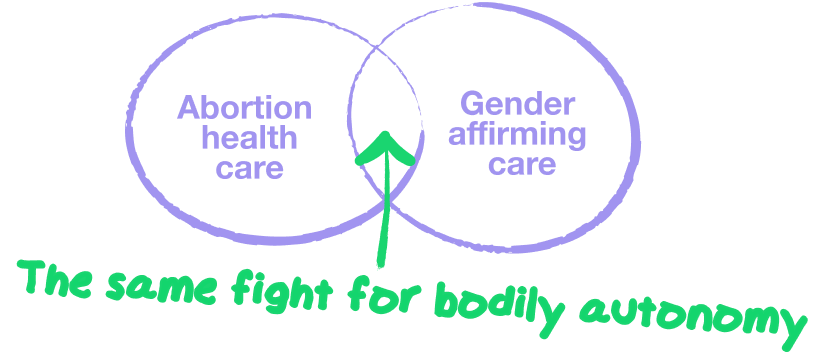
The same policymakers are often using similar tactics to limit people's access to healthcare and deny them bodily autonomy. These strategies are increasingly dependent on criminalization and state surveillance, and they often impact young people first. Young people face the steepest barriers to accessing abortion and gender-affirming care bans. In some states, adults who help minors travel out of state to receive abortion care can receive civil or criminal punishment–similar to states that have attempted to criminalize parents for allowing their children to access gender-affirming care.
Recognizing the patterns in sustained attacks on various aspects of healthcare is essential to resisting them and building solidarity. As coordinated attacks on bodily autonomy continue, those engaged with various advocacy and mutual aid efforts can learn from one another to more effectively protect everyone’s right to bodily autonomy and accessible healthcare.
ACCESS
🌎 REPRODUCTIVE HEALTH ACCESS AROUND THE WORLD
📍ABORTION ACCESS: UNITED STATES AND TERRITORIES
The Interactive Map: US Abortion Policies and Access After Roe, created by the Guttmacher Institute provides an insight into the increasingly polarized and fragmented abortion landscape. The map categorizes states into one of seven categories: Most restrictive, Very restrictive, Restrictive, Some restrictions/protections, Protective, Very protective, and Most protective.
To select any state to see details about abortion policies, characteristics of state residents and key abortion statistics, including driving distance to the nearest abortion clinic, click here
A state by state guide to abortion rights:
To get information about what to expect and to locate abortion support resources and assistance, for Abortion Finder’s State-by-State Guide → click here
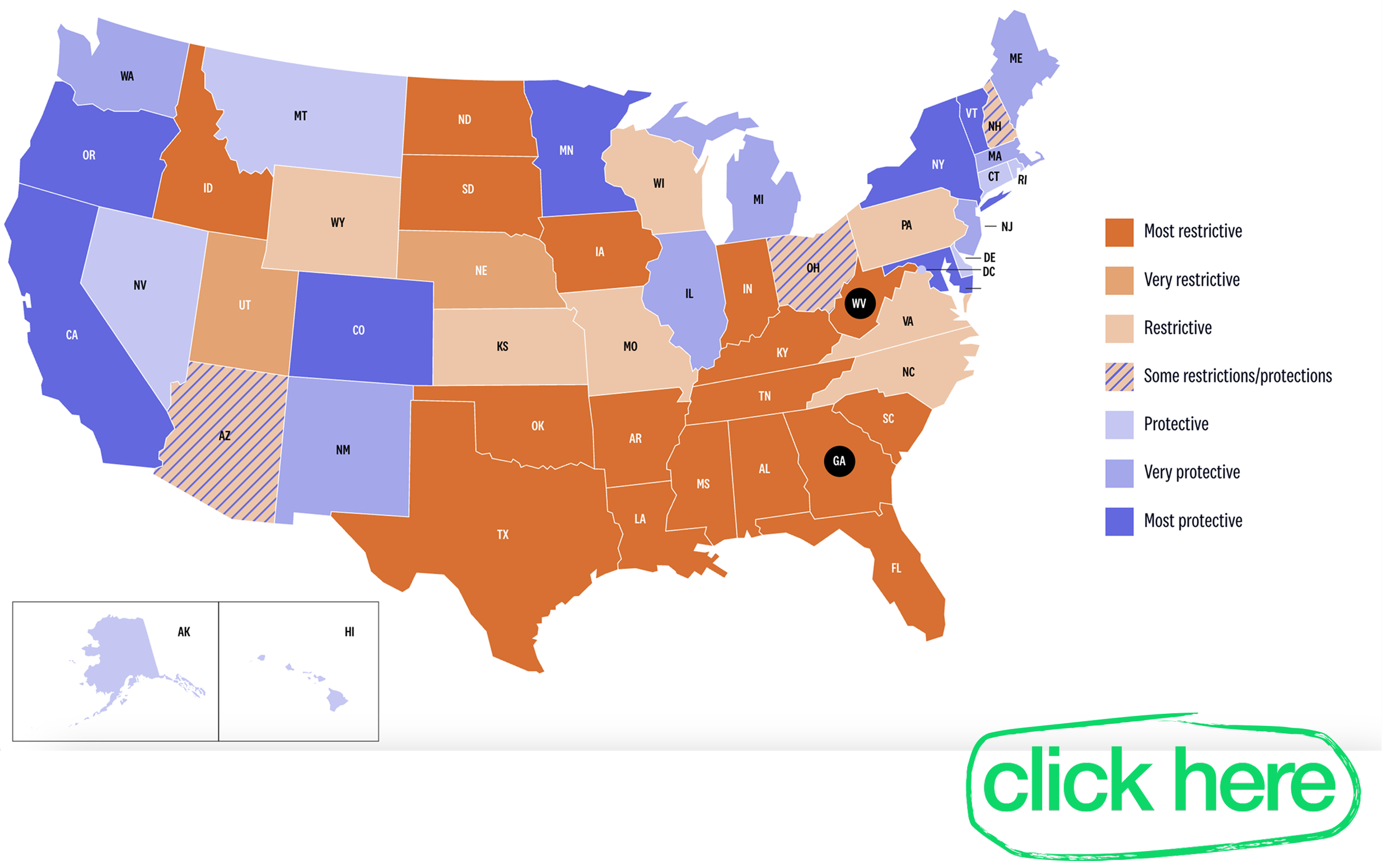
Interactive Map: US Abortion Policies and Access After Roe, Guttmacher Institute (June 24, 2026)
📍ABORTION ACCESS: THE WORLD
The World Abortion Laws Map, created by the Center for Reproductive Rights, is an ongoing record of the legal status of abortion in countries across the globe. The Laws Map categorizes the legal status of abortion continuously, ranging from severe restrictiveness to relative liberality. Using categories such as “prohibited altogether” to “to save a woman’s life,” and indicators to describe the legal grounds, advocates can gain a better understanding and monitor how countries are protecting—or denying—reproductive rights around the world.
To see the World Abortion Laws Map in real time, click here
To see the World Abortion Laws Map through 25 years of progress, watch the video below ⤵
ACTION
🪧 ADVOCACY — Here are action items you can take right now:
1️⃣ Support Abortion Funds
When you support abortion funds, your money goes directly to help patients and people on the ground who work to provide access to abortion.
USA Abortion Fund: National Network of Abortion Funds (NNAF)
Mexico Abortion Fund: FONDO MARIA (MARIA Abortion Fund for Social Justice)
Poland Abortion Fund: Abortion Without Borders
International Abortion Fund: Safe Abortion Action Fund (SAAF)
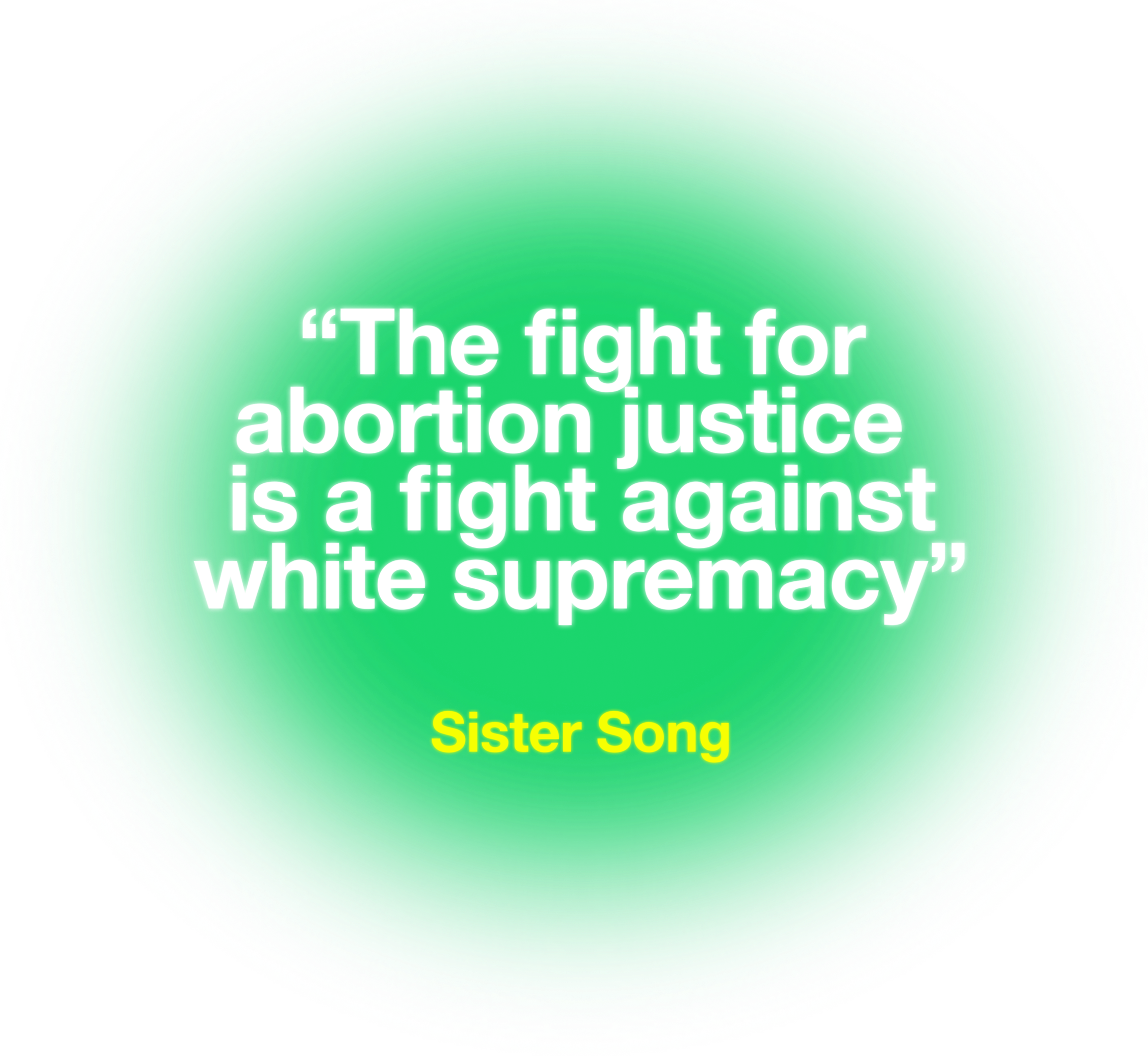
2️⃣ Support Reproductive Justice Organizations
Reproductive Justice means the human right to decide when and whether to have children, and the right to raise your family in a safe, healthy environment. Here are some organizations to support:
Sister Song: @sistersong_woc
Latina Institute for Reproductive Justice: @latinainstitute
We Testify: @wetestify
Afiya Center: @theafiyacenter
The Center for Reproductive Rights:@reprorights
International Planned Parenthood Federation: @ippf_global
Black Mamas Matter Alliance: @blackmamasmatter
Abortion Care Network: @abortioncarenetwork
Reproductive Freedom For All: @reprofreedomforall
3️⃣ Show your support through petitions and pledges.
Take the pledge to protect abortion rights with the ACLU.
Sign this Action Network petition: “I believe abortion is a human right. We must protect abortion access.”
Share on social media: Download these graphics by FEMINIST and Use these hashtags ↓
#BansOffOurBodies #AbortionRights #ProtectAbortionAccess #LiberateAbortion #AbortionisEssential #AbortionisHealthcare #ReproRights #ReproductiveJustice
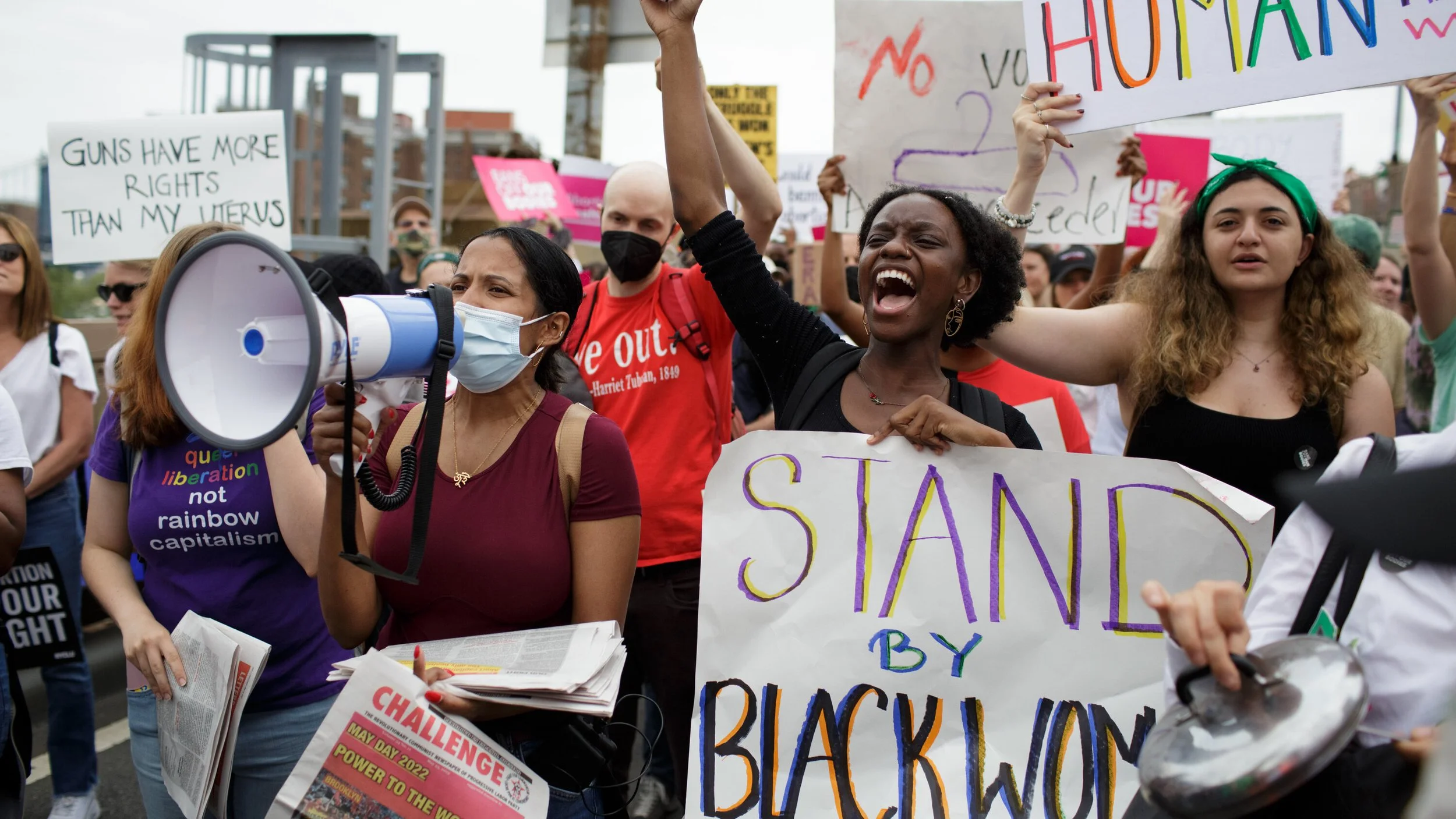
Photo credit: Anna Watts for The New York Times
4️⃣ Demonstrate. Join a rally near you!
Protest for your right to abortion.
Let lawmakers hear you and see you. Join us in Nonviolent action to protect our constitutional right to abortion. → Find local rallies near you
Wear green for abortion rights 💚 Women in Latin America have worn green for abortion rights for nearly two decades. → Learn about the ‘marea verde’
5️⃣ Listen and Learn
Whether you’re new to the issue or looking to deepen your understanding this essential reading list, curated by team FEMINIST and our friends will have you caught up on what you need to know to understand the fight for abortion rights. Find our full list over on FEMINIST HQ.
Stay informed by subscribing to Jessica Valenti’s newsletter, Abortion Everyday.
Listen to podcasts about abortion rights, stories, and more. To start, check out:
CARE
💚 IMMEDIATE ACTION FOR THOSE IN NEED
Need abortion care or resources? Visit YouAlwaysHaveOptions.com for legal protections, abortion pills by mail, travel assistance, and more.
For help finding an abortion provider, visit INeedanA.com
For help funding your abortion, visit Abortion Funds
For help getting through a miscarriage or abortion, 📞 call the hotline: 833-246-2632 or visit mahotline.org
For legal help, visit the repro legal helpline
For transgender health and support visit Folx Health
For those seeking information about abortion, you can chat confidentially with Charley the chatbot embedded on this page.
🔊 What are abortion pills?
A safe, at-home abortion is here. The "abortion pill" or "abortion with pills" is a modern option for ending an early pregnancy safely and effectively.
This method, also known as "medication abortion," involves two types of pills: mifepristone and misoprostol (or misoprostol only, if mifepristone is not available).
The availability and use of medication abortion may vary by state. However, even if state laws restrict access, Plan C offers a comprehensive guide on resources available to you. Learn how to get abortion pills by mail in all 50 states with Plan C @plancpills.
Access abortion pills internationally at Aid Access and seek international abortion information at Women on Web.
Watch this tiktok by @heyjane to learn how it works.
Hey Jane’s Medical Experts answer your questions about the abortion pill below:
Do they expire? Should we stock up just in case?
The medications have a shelf life of 2 years! That being said Misoprostol can become less effective at high temperatures and increased humidity so if you are planning on having treatment on hand make sure it is stored in the safest way.How do they work?
The first medicine you take is mifepristone, which blocks the pregnancy hormone (progesterone) and stops the pregnancy from growing. Then, 24-48 hours later you take a second medicine, called misoprostol. Misoprostol causes cramping and bleeding to empty the uterus.
You can expect bleeding like a heavy period. Taken together, these two pills work up to 98 out of 100 times to end an early pregnancy.Are they harmful to our reproductive system?
No they are not harmful to your reproductive system. I would add "they have a decades long excellent safety profile".
❤️ Self Care & Mental Health Help
We understand this can be distressing, but support is available. You are not alone.
If you or someone you know is in need of immediate help:
→ Contact the Crisis Text Line by texting HOME or HOLA to 741741
→ Explore additional mental health resources in our FEMINIST Mental Health Toolkit
🔒 How to keep your reproductive health data private
The following guide helps you protect your privacy and avoid detection from authorities when planning or having an abortion. → Discover this resource
CONVERSATION
🎙FEMINIST CONVERSATIONS ON ABORTION RIGHTS, ACCESS, AND HEALTHCARE
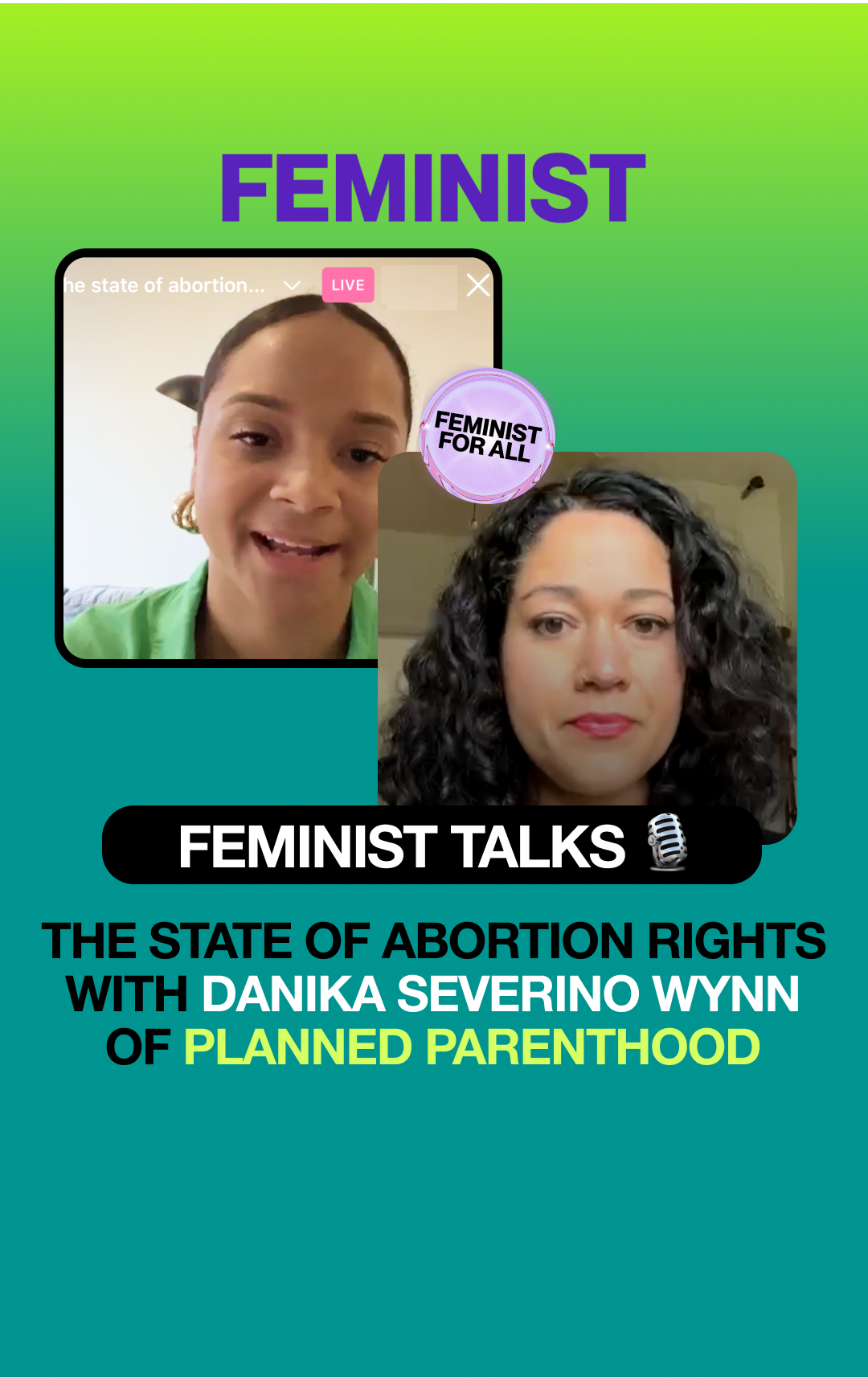
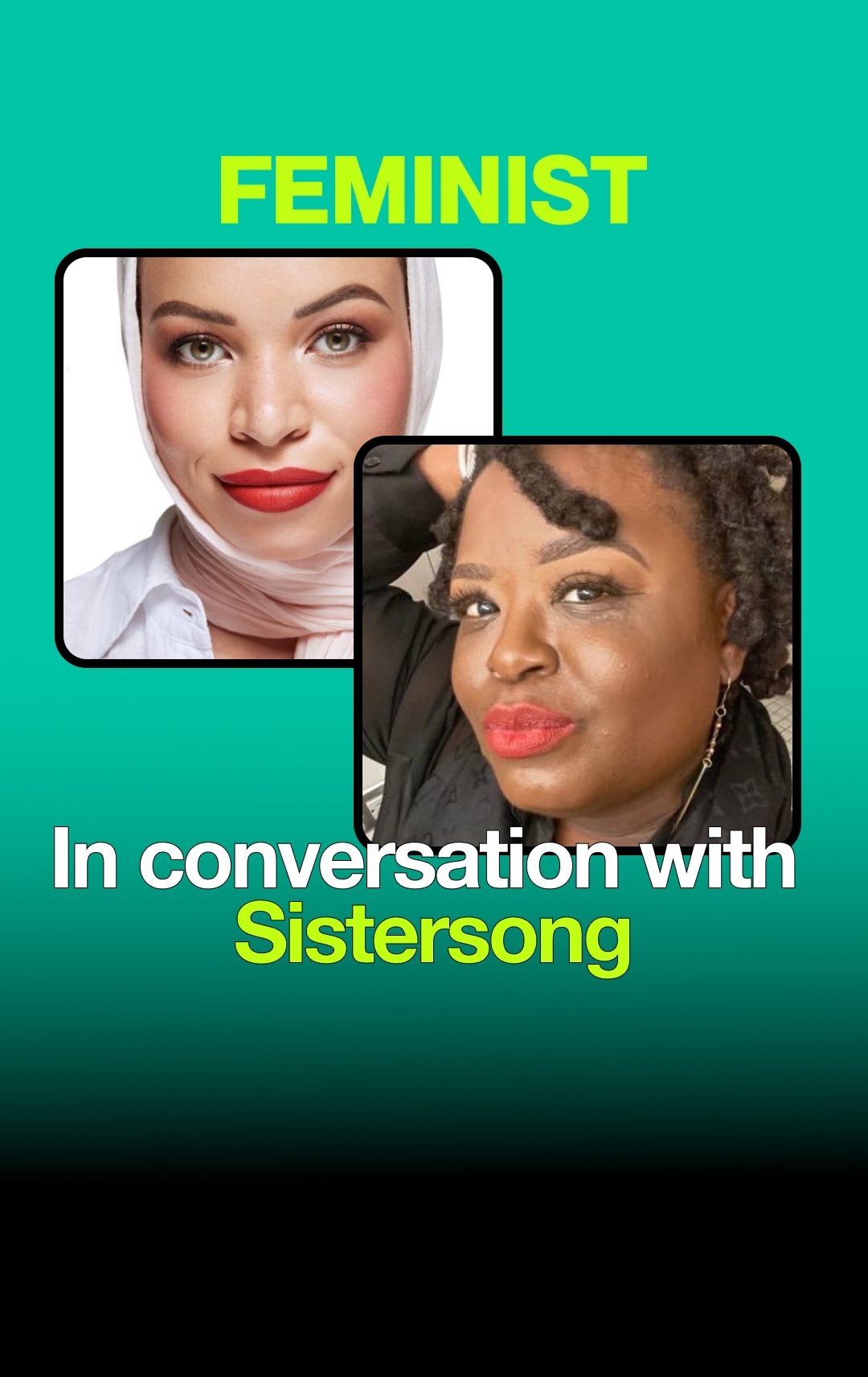
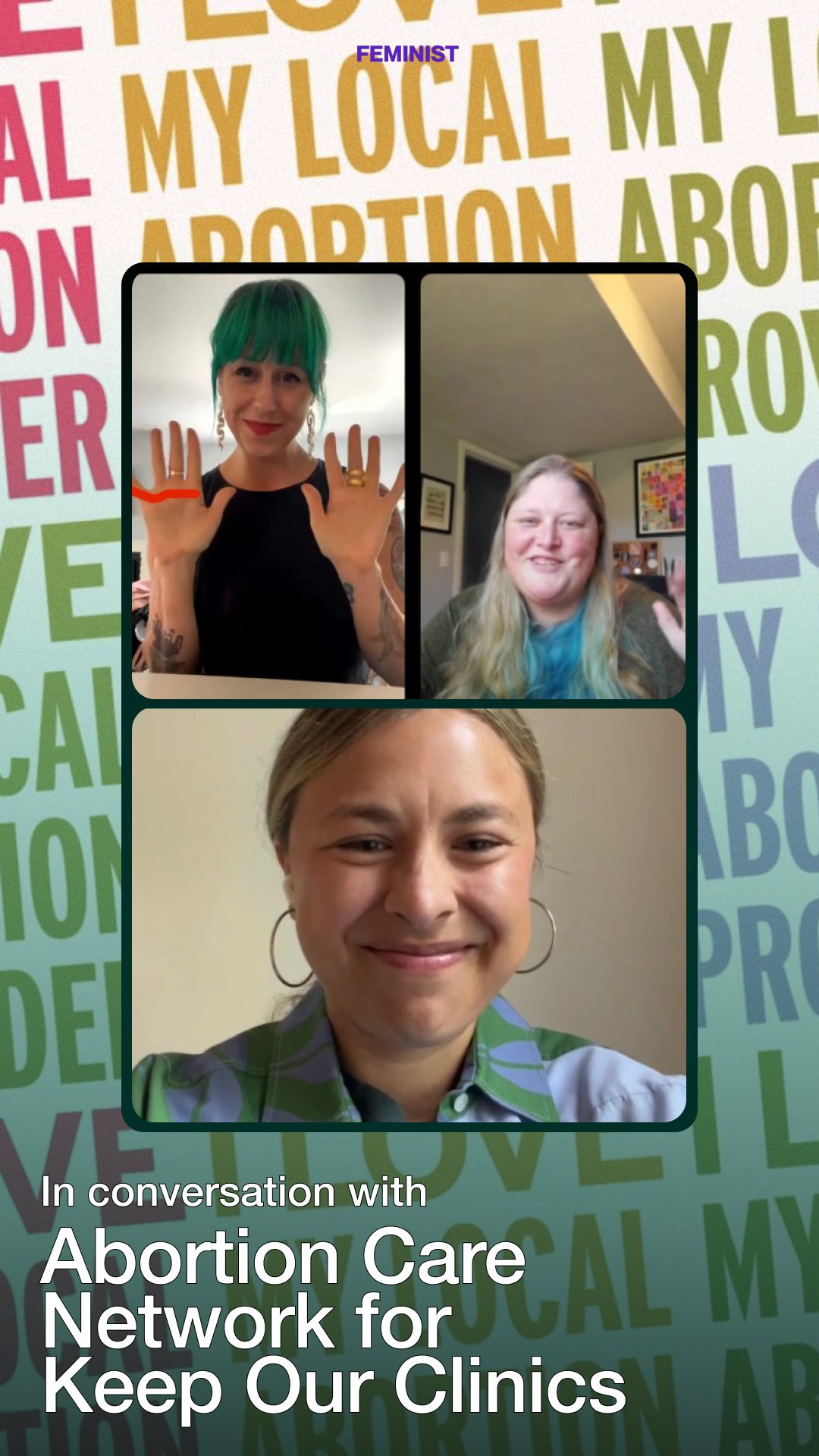
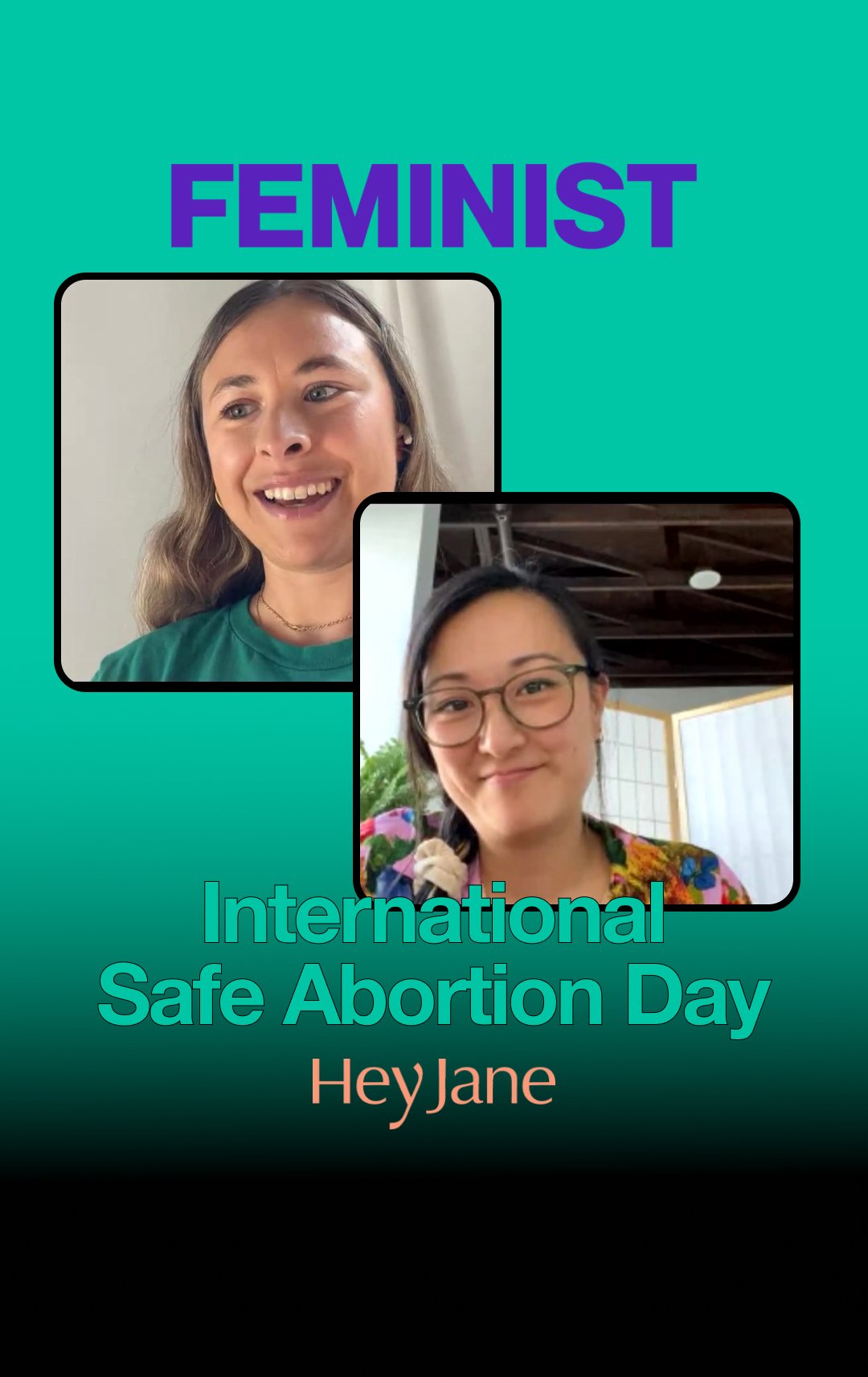
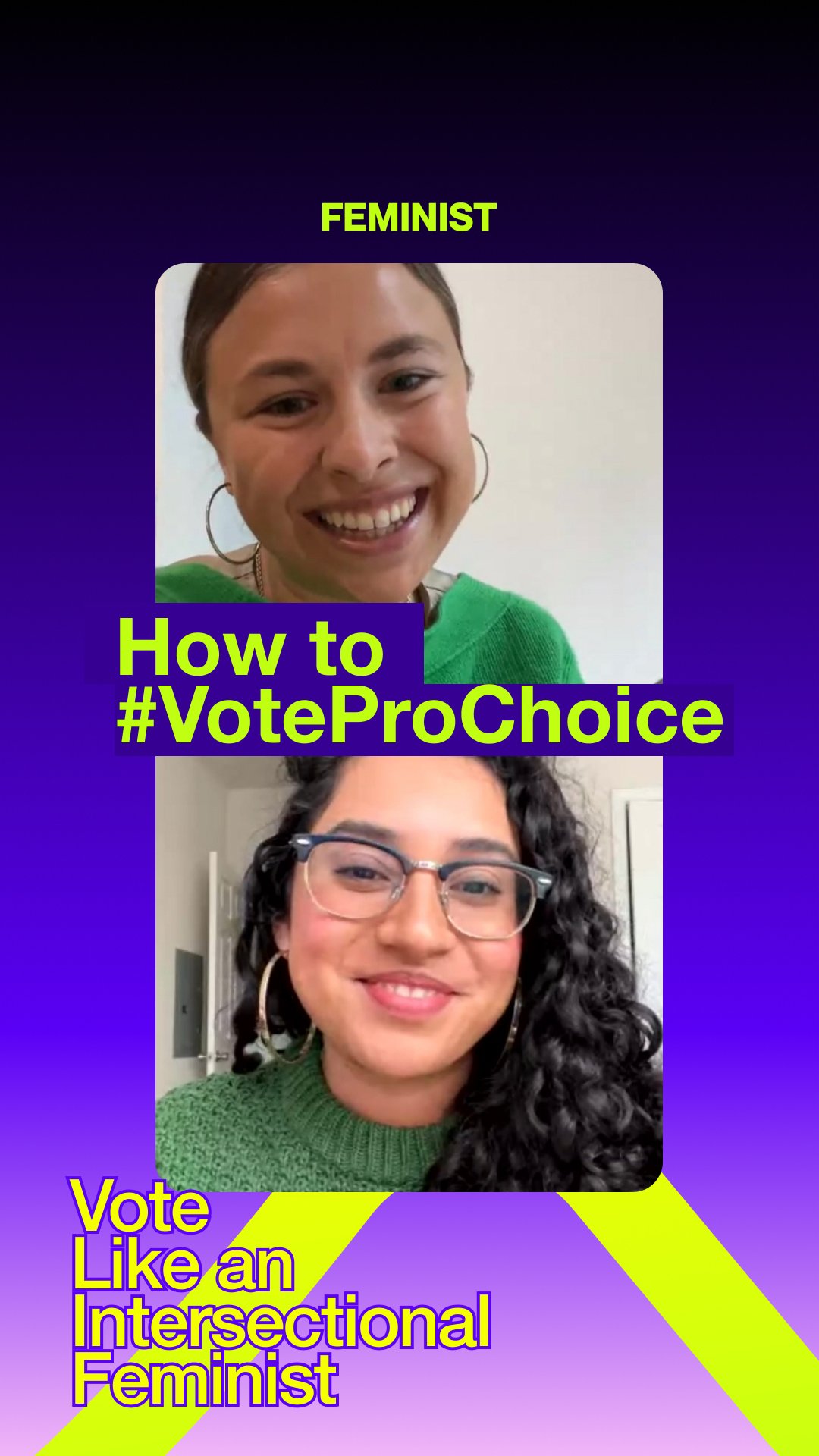
ICYMI: Here are the FEMINIST TALKS on abortion healthcare, rights, and justice with special guests and the FEMINIST Team!
↓ Click on the images to listen back

Interested in Supporting FEMINIST?
ENGAGE:
→ Share this toolkit with a friend in need.
SUBSCRIBE
→ Did you know we have a substack? It’s free to read but paid subscriptions sustain our work.
SUPPORT:
→ Sign up for our weekly newsletter to receive feminist news you may have missed and ways to take action delivered straight to your inbox.
DONATE:
→ Donate to FEMINIST to support to our small team in continuing to advance our mission of advocating for gender equity globally.